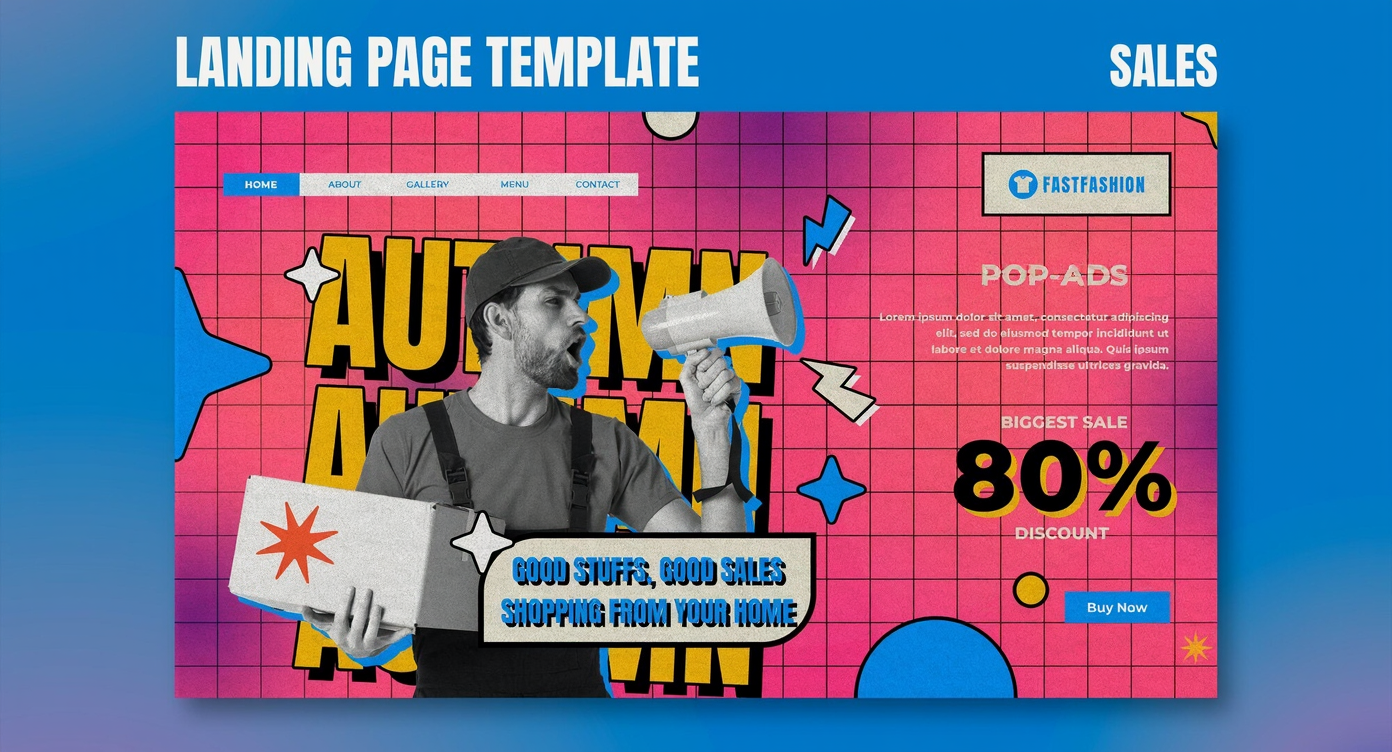
Since the introduction of digital advertising, publishers have always been in search of new and creative ways to increase their revenue while enhancing the user experience. An important step in this area was just made with the release of Google AdSense's "Ad Intents" for auto advertisements. A significant advancement in digital marketing has begun with the transition from generic pop-up ads to high-intent pop-up ads.
Pop-ups often disturb the user experience and tend to be aggressive, and are becoming less common in the modern digital world. Rather, the sector is shifting toward native, hyper-relevant content feeds that precisely match the user's present purchasing intent.
Ad Intents guides readers through a more natural engagement by providing relevant information in contrast to traditional techniques that rely on intrusive advertisements. In addition to respecting the user's browsing experience, this effort gives publishers new ways to increase revenue.
How Do Ad Intents Operate?
Google takes an advanced approach to advertising with Ad Intents, clearly emphasising context and relevance. This feature integrates links and anchors from advertisers into a website's text. A Google Search Result page containing both organic results and sponsored ads is displayed when a user interacts with these links. This smooth integration is crucial because it makes use of intent-driven advertising without depending on third-party cookies, which is in line with the increasing focus on user-centric design and privacy.
The evolution of Ad Intents signals a shift away from conventional advertising methods and toward an approach that puts user intent and content relevancy first. This format is what makes it so beautiful; it doesn't obstruct the user's experience with disrupting advertisements. Instead, it discreetly incorporates relevant advertising into the story of the content, enhancing rather than diminishing the user's journey.
Comprehending High-Intent Pop Advertising
Pop ads with high intent, target people who show clear signs they are ready to engage and are prepared to interact with your content or make a purchase. These advertisements react to specific user activities, like how the user is scrolling, how long they have been on the page, or whether they have abandoned their shopping basket, in contrast to standard pop-ups that show up at random. This implies that you are contacting them only when they are most likely to respond.
The importance of timing and relevancy distinguishes high-intent pop ads from other types of advertising. A visitor who has spent qualified minutes reading product reviews, for instance, is probably more inclined to buy than someone who has only been on your page for seconds. The significance of timing and relevancy distinguishes high-intent pop ads from other types of advertising. A visitor who has spent five minutes reading product reviews, for instance, is probably more inclined to buy than someone who has only been on your page for three seconds.
High-intent pop advertisements are aware of these small variations and understand what and when to present messages that are suited to each circumstance.
To learn more about pop advertising strategies, read our blog on “6 Powerful Pop Advertising Strategies You Shouldn't Ignore in 2026.”
What is Non-Intrusive & Personalized Pop Ad?
It takes meticulous planning to create non-intrusive pop advertising that both captures visitors' attention and respects their browsing experience. You should consider timing, frequency, and visual design as interrelated components that influence how people interpret your message.
In order to help your business and your customers, you will need to build ad experiences that are beneficial rather than bothersome. Work on customising your pop-up ad approach depending on actual user behaviour and purpose.
Controls Ad Timing and Frequency
Use scroll-depth triggers so that pop-ups don't appear until consumers have interacted with 50–70% of your content. This shows that they are indeed interested in your products before you present any offers to them. This adds value to your customers’ intent and makes the customer experience satisfactory. You may also prevent repeat visitors from seeing the same pop-up ads more than once within 30 days, and set frequency caps. You also need to check that your ads are not bothering users who have previously converted or rejected your message by using cookie-based tracking.
Space-Respecting Visual Design
Visibility and constraint must be balanced in your pop ad images. Instead of totally obstructing site content, use semi-transparent overlays. To allow viewers to see the underlying site, keep pop-up proportions between 40 and 50 percent of the screen. Select colour schemes that work well with the current design palette of your website rather than in opposition to it.
Personalization in Pop Ads
Pop-up advertising that is personalized turns irrelevant interruptions into meaningful events. You need to go for location-based targeting, like advertising room heater promotions to users in colder climates and air conditioning to those in warmer climates, which will enable you to present region-specific offers. You can also display product recommendations that are in line with previously viewed goods by using behavioural triggers based on browsing history.
User Segmentation
By segmenting audiences based on the source of referrals, you may provide loyal consumers with offers through email campaigns, like early access to new products, while offering welcome offers to first-time visitors via social media. In order to provide customised messaging that feels personal rather than mechanical, dynamic content insertion needs to be collected, such as name, company, gender, or age, etc. Instead of sending out one-size-fits-all messaging, this pop ad compiles a user experience strategy based on the user segmentation data, which shows you are aware of each person's demands, which fosters trust.
Key Strategies for Conversion-Focused Intent- Based Pop Advertising
The key tactics for maximising ROI on intent-based pop advertising revolve around strategic alignment and execution.
Provide Hyper-Contextual Benefits
- A pop-ad will get converted only when it addresses the exact query with the perfect solution the user is looking for.
- Don't offer a generic site-wide discount to a person who finds your website from a highly targeted advertisement or search query. Present a pop-up ad with product or interest-specific offers exclusive to the user.
- Show a pop-up window with a direct rival comparison chart or an extended free trial if they are currently browsing software price pages.
Use Advanced Behavioural Mechanisms
- Give up utilising the typical time-delayed pop-ups that appear three seconds after a website loads. This causes disruption; rather, link high-intent micro-commitments to your display rules.
- Only show the pop-up when the user has viewed 50% to 70% of the site. This guarantees that before an offer is made, they are truly interested.
- Handle a pricey cart abandonment differently from a low-value cart abandonment. Depending on the value of their prospective cart, scale the value or aggressiveness of your offer.
- Make use of mouse-movement tracking to identify when a cursor breaks the viewport's top plane in the direction of the "X" button or URL bar, providing you with a calculated final opportunity to close the deal.
Develop Frictionless Forms & CTAs
- Any needless friction will cause an instant bounce because high-intent consumers are moving quickly.
- Ask for as little information as possible, ideally in only one box. Your pop-up conversion rates can be reduced by up to 50% for each extra field that is requested.
- Start with a straightforward "Yes / No" inquiry rather than long query forms.
- Use high-value ownership phrases like "Claim My 30% Off" or "Get My Free Strategy Guide" in place of passive, transactional terms like "Submit" or "Apply".
Use Sparing Incentives to Preserve Your Profits
- Don't show a discount coupon to everyone in order to diminish your brand's value or your profit margins.
- To distinguish between customers who are unsure and those who are prepared to pay the full price, use intent signals.
- Instead of giving the consumer a discount code right away if they have a product in their cart and want to leave, use a pop-up that highlights the free shipping threshold. This maintains your core business margins while increasing Average Order Value (AOV).
Optimize for Mobile
- Despite the fact that mobile traffic accounts for the great bulk of web interactions, mobile pop-ups are infamous for their technical shortcomings.
- Make sure your Call-To-Action (CTA) buttons are at least 44 by 44 pixels so that a human thumb can easily press them without making a mistake.
- The "X" button should never be hidden. To preserve brand trust and avoid annoyance from forced stays, offer a big, conspicuous close option.
- To prevent severe SEO penalties from search engines, limit mobile pop-ups to smaller bottom banners or slide-ins rather than full-screen takeovers.
Conclusion
It is more than just a strategic change; the move to conversion-focused pop advertisements is a fundamental rethinking of how you engage with your audience. You can build advertising that respects your audiences and produces measurable results by putting high-intent experiences ahead of disruptive approaches.
Start using these strategies today to rebuild your pop-up ad model. Test one aspect at a time, track your findings, and improve your strategy. The advertisers who win don't have the loudest pop-ups; they recognise that conversion-focused pop advertising works by offering value rather than demanding attention.
Your next high-converting campaign begins with a single, well-designed pop-up. Get connected with the experts of 3Mads to build high-conversion pop ads.